
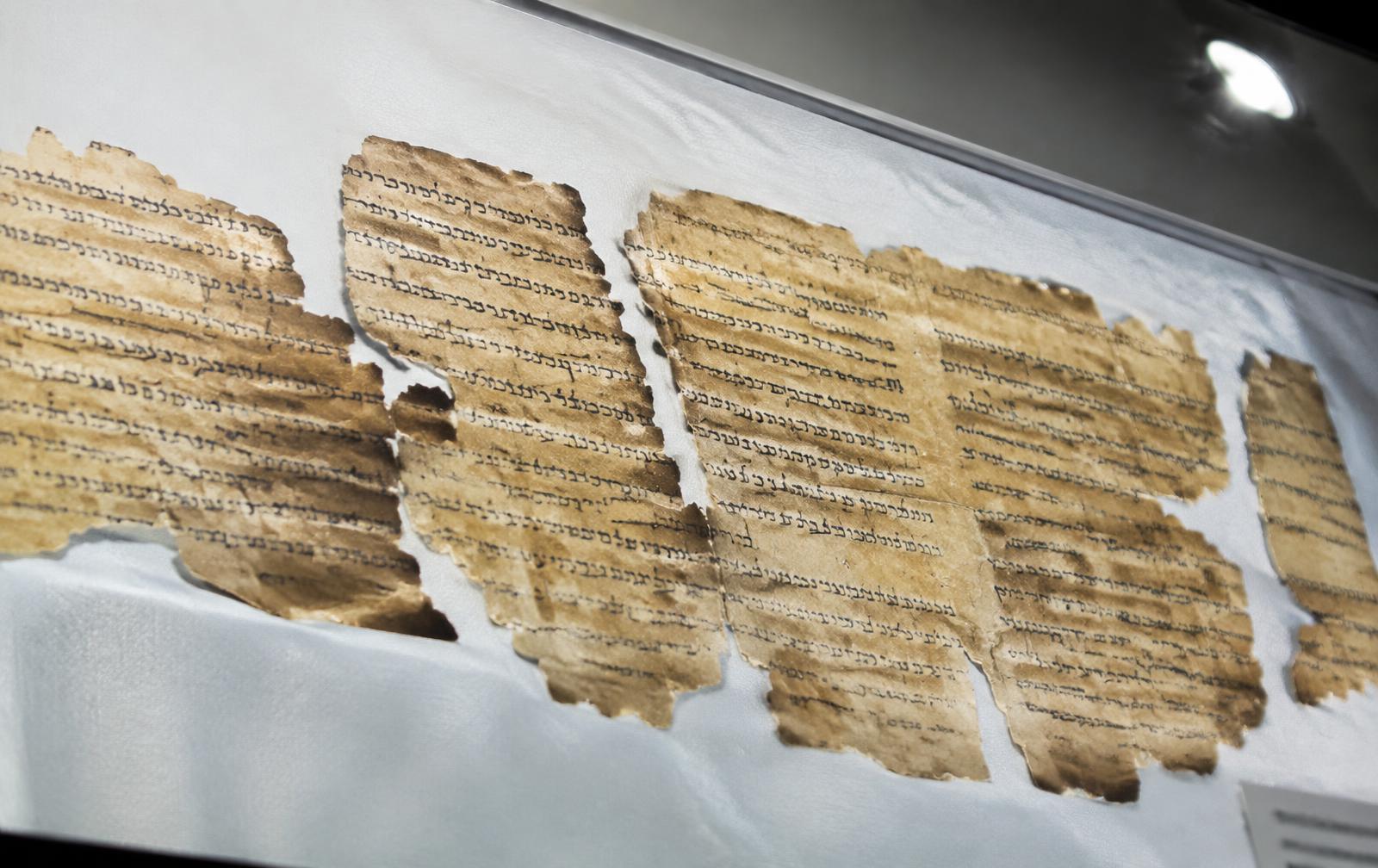
A New Chronological Frontier in Biblical Archaeology
The Dead Sea Scrolls represent one of the greatest archaeological discoveries of the twentieth century, providing an unparalleled window into ancient Jewish society, religious practice, and the origins of biblical texts. However, pinpointing the exact age of these fragile parchment fragments has long sparked fierce scholarly debate. Now, researchers from the University of Groningen have developed BiG-MAM, a sophisticated machine learning neural network that analyzes subtle variations in ancient scribal handwriting to date ancient manuscripts with unprecedented precision.
Decoding Scribal Biometrics with Artificial Intelligence
Advanced computer vision meets traditional biblical scholarship in a pivotal paradigm shift.
Traditional paleography relies heavily on human visual judgment to date handwriting styles, which can introduce subjective error margins of up to a century. The BiG-MAM AI model was trained on high-resolution multispectral scans of hundreds of securely radiocarbon-dated manuscripts, isolating microscopic stroke mechanics, ink flow thickness, and pen angle dynamics. When applied to the Great Isaiah Scroll and other Qumran manuscripts, the AI analysis concluded that several significant texts were penned between 20 and 50 years earlier than previously assumed, pushing their composition closer to the second century BCE.
Reshaping the History of Religious Texts
These revised datings offer profound implications for historians and theologians alike. By demonstrating that biblical manuscripts were actively circulating, copied, and studied earlier than previously believed, the findings illuminate how rapidly literary traditions evolved during the Hellenistic period. The integration of advanced computer vision with traditional biblical scholarship marks a pivotal paradigm shift, transforming how ancient human heritage is cataloged and dated. This article is based on reporting originally published by Phys.org and the University of Groningen.