
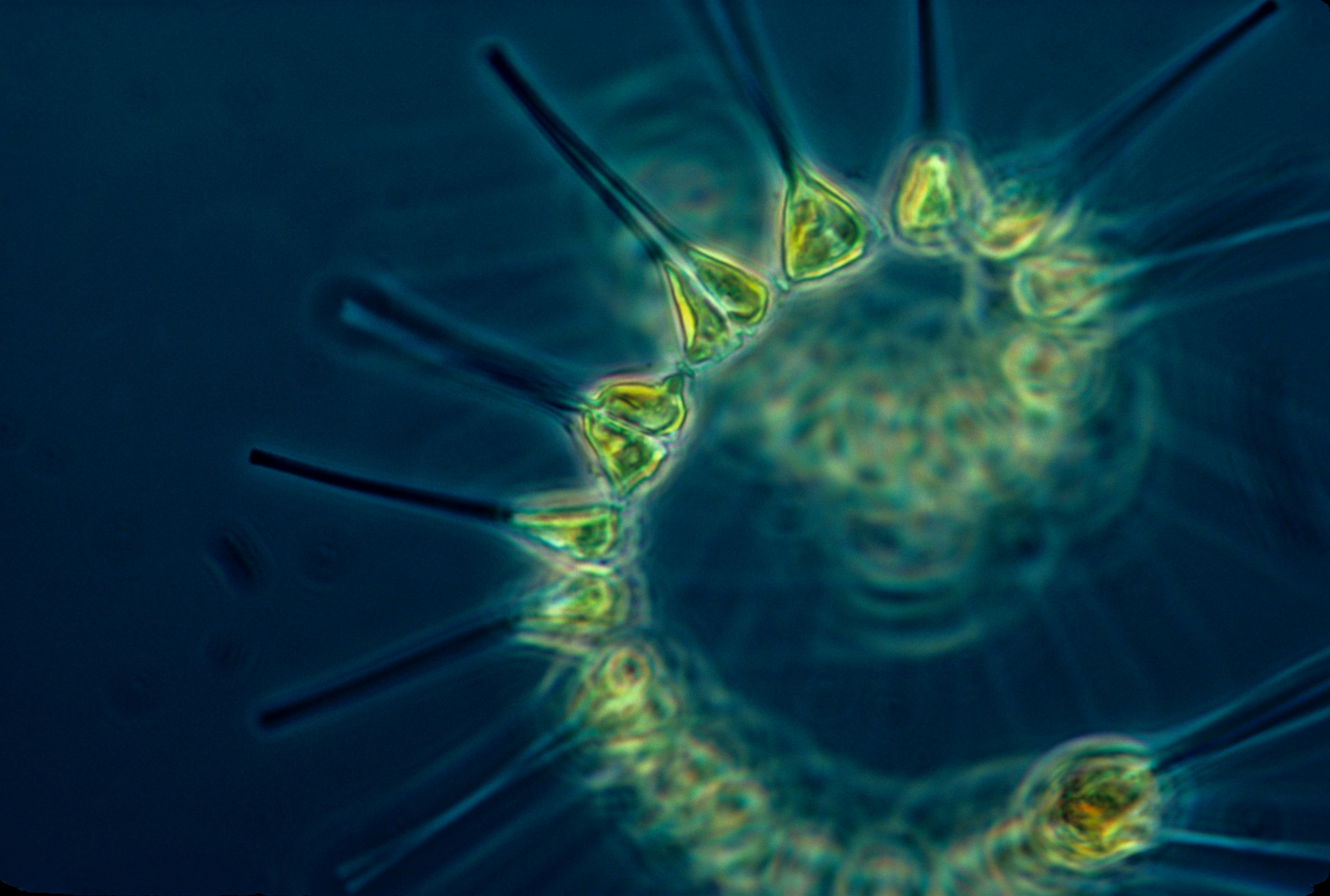
A limit in biology can mean two different things: the point beyond which life cannot function, or the point beyond which we have not yet found it. An amoeba collected in California’s Lassen Volcanic National Park is putting that distinction to the test.
According to Popular Mechanics, researchers have identified a single-celled organism that can still move and seek bacterial prey at 64°C. Named Incendiamoeba cascadensis, and nicknamed the “fire amoeba,” it reportedly exceeds the previous recorded heat-tolerance benchmark for eukaryotes of 60°C.
Eukaryotes are organisms whose cells contain a nucleus. The discovery is therefore not a new temperature record for all life. Its significance is more specific: a cell with this internal architecture can function in hotter conditions than previously documented.
A limit in biology can mark the boundary of life—or the boundary of where we have looked.
Activity is not the same as growth
Popular Mechanics describes research led by Syracuse University microbiologist Beryl Rappaport and published in Cell. The team collected samples from geothermal features in Lassen, then isolated amoebae from water, sediment and bacterial biofilms.
In laboratory incubators, the amoebae continued dividing as temperatures rose, before reproduction slowed and stopped around 63°C. At 64°C, they could still move and search for food.
That distinction matters. Remaining active at a temperature does not establish that an organism can reproduce there indefinitely. The finding extends a reported boundary for eukaryotic activity; it does not show that these amoebae flourish without limit in scalding water.
Keeping a cell in working order
Heat threatens the molecular structures on which cells depend. Proteins must retain particular shapes to do their jobs, and high temperatures can disrupt that folding.
The researchers’ genetic analyses, as described by Popular Mechanics, suggest that the amoeba increases the activity of genes involved in protecting cellular machinery under heat stress. Genes associated with protein folding were among those particularly active.
The report also describes an unusual balance of charged components in the amoeba’s proteins, with more positively charged residues and fewer negatively charged ones. The researchers suggest this may contribute to heat stability. It is a possible part of the explanation, rather than a complete account of how the organism survives.
Intriguingly, sequences in its genome resemble DNA recovered from other geothermal environments, including Yellowstone and New Zealand. Those similarities suggest relatives may await discovery; they do not establish that those relatives share the same temperature tolerance.
Extreme environments are not interchangeable
An earlier story from Ethiopia offers a useful comparison—and a reason for caution. In 2017, BBC Future reported researchers’ claims of bacterial life in highly acidic, salty geothermal waters in the Danakil Depression. The underlying findings were described as unpublished at the time.
That account concerned bacteria, not eukaryotes, and several environmental stresses rather than heat alone. It provides historical context for the search for extremophiles, but does not independently verify the California amoeba’s record.
Taken together, the reports point towards a broader question: which combinations of conditions can living cells tolerate? Temperature alone cannot answer it. Acidity, salt and the resources an organism needs also shape whether a place is habitable.
The fire amoeba may help researchers refine those questions, including in the search for potentially habitable environments beyond Earth. It is not evidence of extraterrestrial life. Its immediate lesson is closer to home: the known boundary of a cell’s endurance may also mark the boundary of our sampling.