
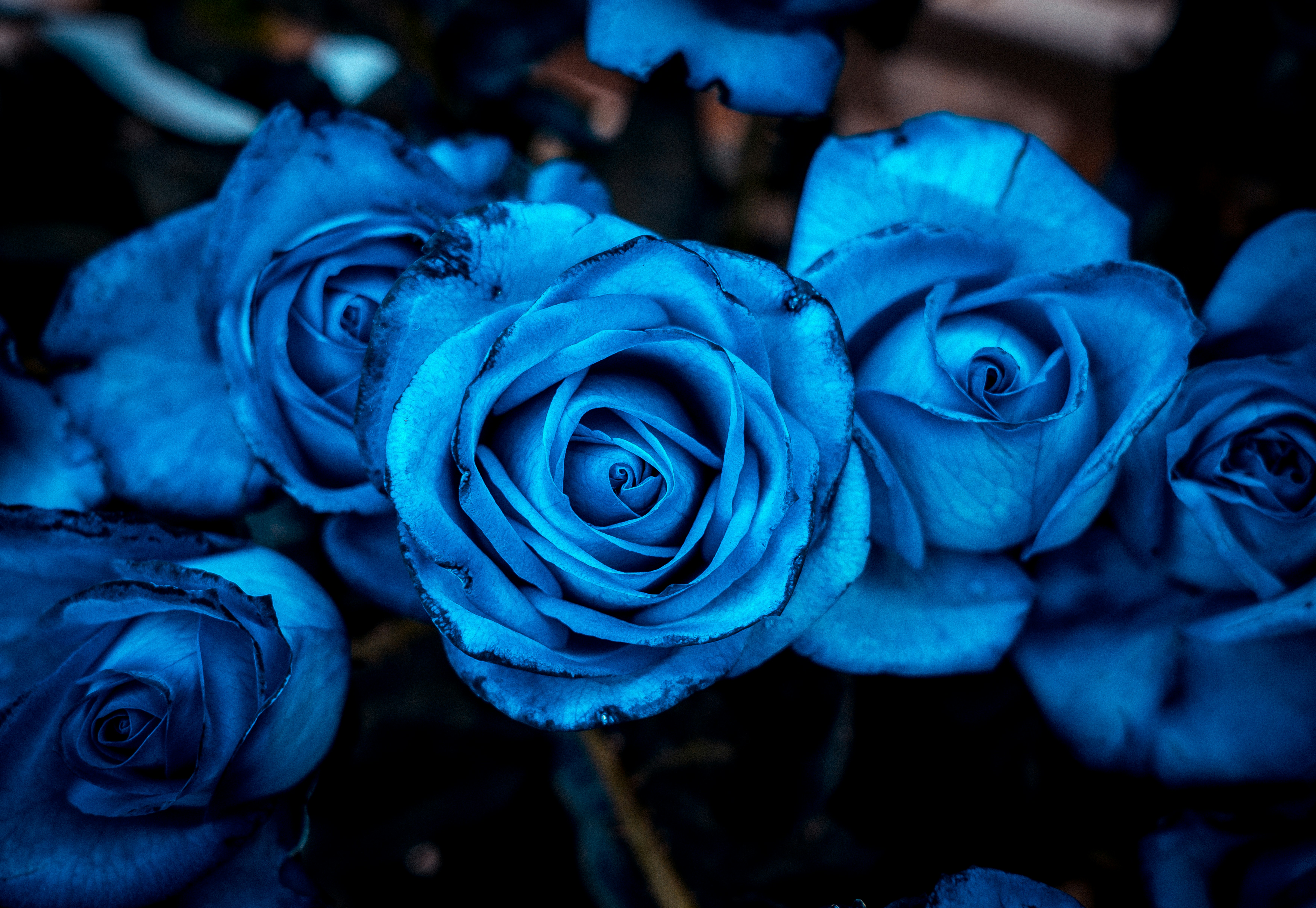
A flower's color depends not only on its pigments. That is evident from efforts to create blue roses, where nearly colorless molecules have proven to be crucial players.
According to Science News, researchers from Japan's Suntory have produced roses classified as violet-blue. The findings were presented at an international horticultural congress in Kyoto.
Roses naturally lack an enzyme required to produce blue pigments. As early as 2004, researchers inserted a gene that enabled roses to produce the pigment delphinidin. However, the flowers turned out more purple than blue.
A flower's color depends not only on its pigments.
The explanation lies in the color's chemical environment. Naturally blue flowers also use so-called copigments: helper molecules that stabilize the pigments and make the color a deeper blue.
This time, the researchers inserted four genes from other flower species into a pink rose. The genes enabled the plant to produce both blue pigments and the necessary helper compounds. The combination of the pigment malvidin and the copigment isoorientin produced a bluer hue than delphinidin alone.
The more copigments the petals contained, the bluer the flowers became. The color held up through seven years of greenhouse trials in Japan and three years of field trials in Colombia.
Yet violet-blue is not the same as true blue. The researchers therefore aim to refine the shade further. The rose's transformation shows that biological traits can require interaction between several distinct chemical building blocks.